BPMN offers four main diagram types to describe different aspects of a business process: 1. Process Diagram This is the most common type of BPMN diagram,...
BPMN offers four main diagram types to describe different aspects of a business process:
1. Process Diagram
- This is the most common type of BPMN diagram, used to describe the flow of activities within a process.
- It uses BPMN symbols like activities, gateways, and events to represent steps, decision points, and the start and end points of a process.
- Suitable for describing sequential processes with branches and conditions.
- Examples: Order processing diagram, employee recruitment process diagram, book borrowing process diagram.
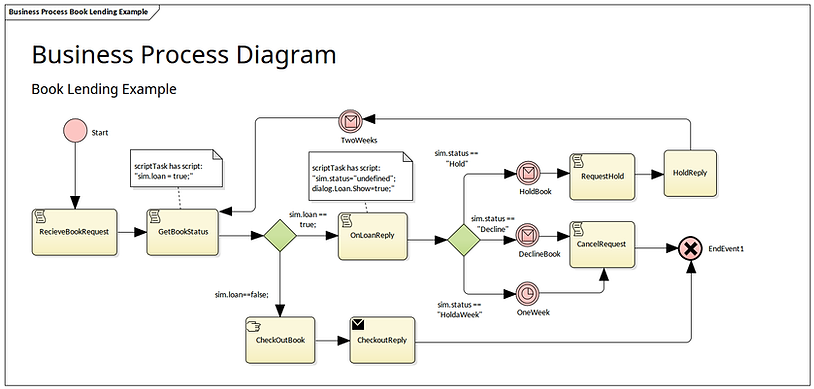
Book borrowing process diagram - ref: sparxsystems.com
2. Data Flow Diagram
- Focuses on the flow of data between activities in a process.
- Uses BPMN symbols like data objects and data stores to show how data is created, moved, and used within the process.
- Suitable for describing processes involving a lot of data where tracking the origin and destination of data is important.
- Examples: Data flow diagram of an accounting system, data flow diagram of a warehouse management system.
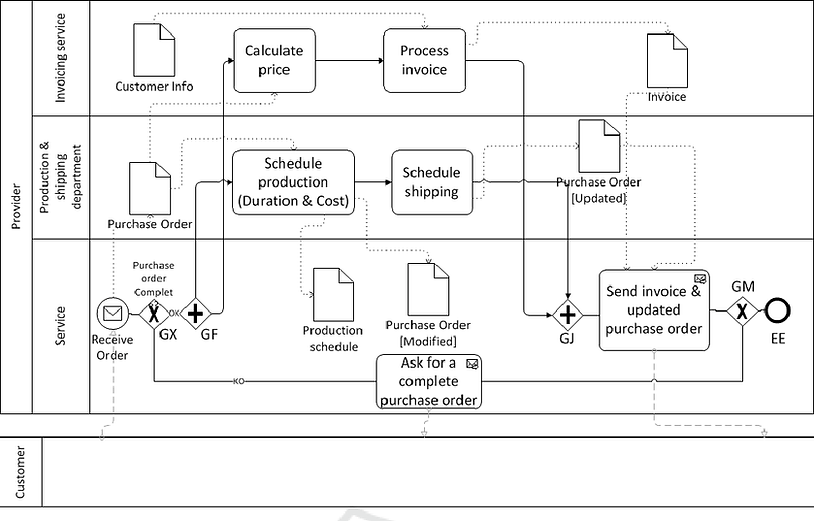
Order booking diagram - ref:semanticscholar.org
3. Collaboration Diagram
- Describes the interaction between participants in a process.
- Uses BPMN symbols like pools and lanes to represent the roles and responsibilities of each participant.
- Suitable for describing processes involving multiple departments, divisions, or organizations.
- Examples: Collaboration diagram for online order processing, collaboration diagram for customer complaint resolution.
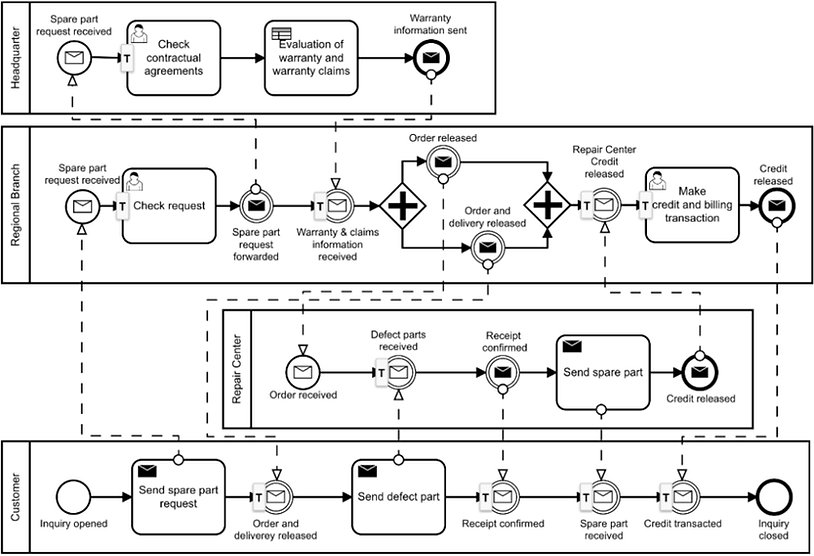
Business process diagram of an electronics manufacturing company. Ref modernanalyst.com
4. Choreography Diagram
- Describes the interaction between activities in a process, focusing on how activities communicate and coordinate with each other.
- Does not use BPMN symbols like participants; only uses activities and data flows.
- Suitable for describing highly interactive processes that require close coordination between activities.
- Examples: Choreography diagram for booking a flight, choreography diagram for a bidding process.
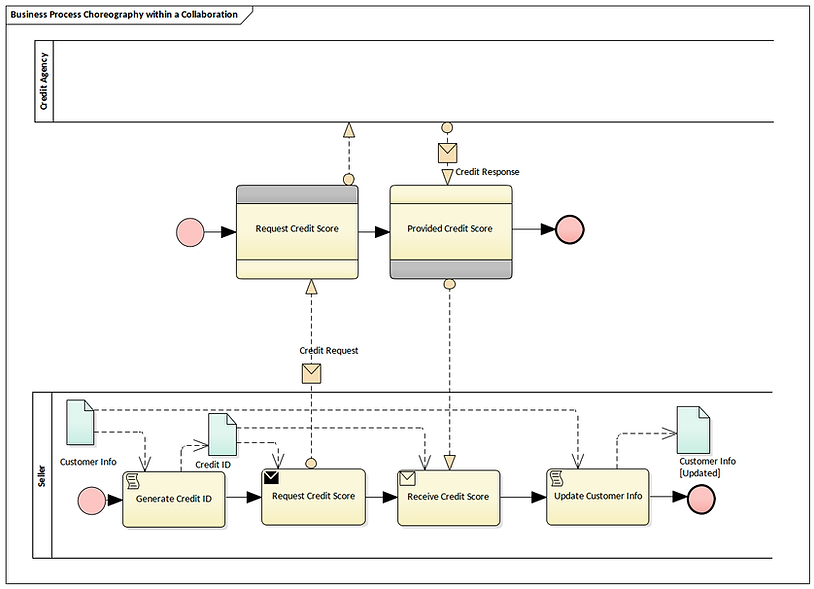
Interaction diagram for checking customer credit score - ref: sparxsystems.com
5. Choosing the Right BPMN Diagram Type
As you can see, each diagram type has a different purpose and meaning. Depending on the situation and context, BAs can choose the appropriate diagram type:
- Process Diagram: Suitable for describing the overall process.
- Data Flow Diagram: Suitable for describing the detailed flow of data.
- Collaboration Diagram: Suitable for describing the interaction between participants.
- Choreography Diagram: Suitable for describing the interaction between activities.
The most common diagram type I encounter and use in my work is the process diagram combined with a collaboration diagram to describe a process that is performed or influenced by different stakeholders. A typical example is describing the business processes of a manufacturing company, from importing raw materials to production, warehousing, and sales.